
A Gallery of Some Important Members of the House of Keys
Six prominent and important Members from the 1800s are portrayed below, accompanied by a short biography.
 |
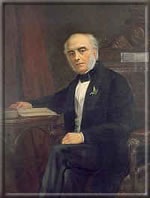
Colonel Mark Wilkes, FRS (1759-1831) Following a distinguished career in the British Army in India and Governorship of St Helen (where he was responsible for the captive Napoleon), Wilkes became a Member of the Keys in 1816 and Speaker in 1823, following the death of his father-in-law, Major John Taubman. He played a major part in the ongoing disputes between the Keys and the Island’s Governor, the 4th Duke of Atholl. |
 |
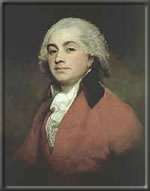
Edward Moore Gawne (1802-1871) served as a Member of the Keys from 1829, at the relatively young age of 27, and became Speaker in 1854 following the death of his uncle. Having fought strenuously against the introduction of popular elections, Gawne oversaw what was, for him, the lowest point in the long and illustrious history of the Keys when the self-elected House was finally dissolved in 1867. |
 |
Major John Taubman (1746-1822) entered the House of Keys in 1799, following the death of his father, John Taubman senior. He remained Speaker until his death in 1822. In 1799, he raised the Douglas Volunteers, of which he was Major Commandant. He also served as Major of the Isle of Man Volunteers. Both were military groups created to defend the Island in the event of an invasion by Napoleon’s forces.
|
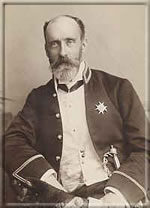 |
Sir John Stenhouse Goldie-Taubman JP (1838-1898) followed his father, John Taubman Goldie-Taubman, both into the Keys and the position of Speaker. He was first elected as a Member by the Keys in 1859 and then elected by the voters of Douglas in 1867, when he was chosen as the new Speaker. He oversaw first the new elected Keys and then its move to the new House of Keys in Douglas in 1874.
|
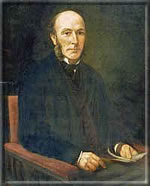 |
Edward Curphey Farrant (1830-1890) was selected as a member of the House of Keys at the age of 21, on the death of his father William Farrant. Though he voted against the Bill to dissolve the self-elected House, he did stand for the Ayre Sheading in the first general election in 1867. |
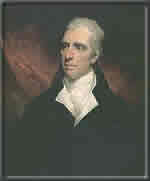 |
John Christian Curwen (1756-1828) entered politics in 1786 as the MP for Carlisle. In 1791 he took the name Curwen. At Westminster he was considered one of the most able Whig politicians, promoting Parliamentary Reform. He was also a member of the House of Keys during the 1820s and took a leading role in opposing the claims of the Duke of Atholl. |