
Castle Rushen – Kings and Lords of Mann
English rule culminated in the passing of control of the Island to Sir John Stanley in 1405 by Henry IV and this became a hereditary right on payment of two peregrine falcons to all succeeding English monarchs on their coronation. The family dynasty thus established lasted until 1736. Between 1405 and 1521 five Stanleys became “Kings of Mann and the Isles” after which time the title was “Lord of The Island of Mann.” To this day in Mann the reigning monarch of Britain is known by this title.
Foremost of the 17th century Lords of Mann was James Stanley, 7th Earl of Derby, known as Yn Stanlagh Mooar – The Great Stanley (below right). With his Countess, Charlotte de la Tremouille, the Earl held the Isle of Man as one of the last Royalist strongholds during the English Civil War.
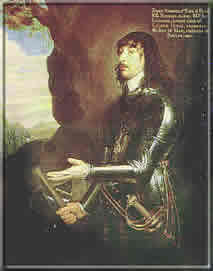 Here, at Castle Rushen, he established a secondary Royalist court before leaving to fight the Royalist cause in England. To the devastation of the Countess Charlotte, James was never to return, being captured and then later executed at Bolton in October, 1651.
The Countess Charlotte held the Castle until the end of October 1651, when, as a result of the Manx Rebellion led by Illiam Dhone and her betrayal by her own garrison, she was forced into a safe surrender to Parliamentary forces under Colonel Duckenfield.
Derby House is a 17th century building, used originally for living accommodation for the Lord of Mann and his household. The sloping earth “glacis,” now grassed, which still surrounds the Castle was originally paved with stone flags to deflect cannon balls, as the increasing use of cannon had endangered the existing walled defences.
Go to Lords’ Dining Hall
Return to Castle Tour